Owned evidence
Your product pages, documentation, comparisons, use cases, FAQs, and proof should state exactly what the offer is, who it fits, and why it deserves consideration.
AnswerCue / AI visibility scanner
People now ask ChatGPT, Claude, and Gemini which product to use, which service to buy, and which provider to choose. Give AI clear, credible evidence of why your offer belongs in the answer.
The shift is already here
Ask an assistant for a merchant of record or an email API and products such as Polar or Resend may enter the comparison. That recommendation surface is measurable. AnswerCue tests whether your offer gives AI enough clarity and evidence to be considered when it is genuinely relevant.
In SOCi's 2026 study of more than 350,000 locations across multi-location brands. AI recommendations are a narrower contest, not an automatic extension of a Google ranking. Study summary
Your website is one witness
Recommendation visibility is shaped by what you publish, what independent sources can verify, and what models repeatedly observe. Treat all three as one evidence system.
Your product pages, documentation, comparisons, use cases, FAQs, and proof should state exactly what the offer is, who it fits, and why it deserves consideration.
AI may also rely on credible reviews, roundups, communities, directories, and independent coverage. Those sources can confirm claims your own website cannot prove by itself.
Run the same high-intent questions across relevant models and record the date, names, sources, and framing. Look for patterns without pretending they are permanent rankings.
A useful first pass
Write down the purchase and comparison questions your best-fit customer would genuinely ask.
Record which products appear, how they are described, and which external sources support the answer.
Strengthen the pages and proof you control before chasing mentions elsewhere.
Earn legitimate coverage in the places buyers already use to evaluate the category.
Repeat the same prompt set over time and compare evidence, not vanity scores.
A polished site is not enough
AI cannot tell exactly what your product or service does, who it is for, or when it should be chosen.
Your offer is described too broadly for an assistant to match it to a specific recommendation question.
Your claims are not backed by clear use cases, comparisons, customer proof, or other verifiable evidence.
A diagnostic, not a promise
AnswerCue reads the public evidence on your site, tests the story against realistic product and service questions, then gives you a clear next move.
Add your product or service website, category context, and the competitors you want to compare.
The scan reviews technical access, product clarity, proof, structured data, and answer-ready content.
Your offer is tested against realistic recommendation prompts to see how clearly AI can understand and compare it.
You get a prioritized report showing what helps, what blocks visibility, and what to fix first.
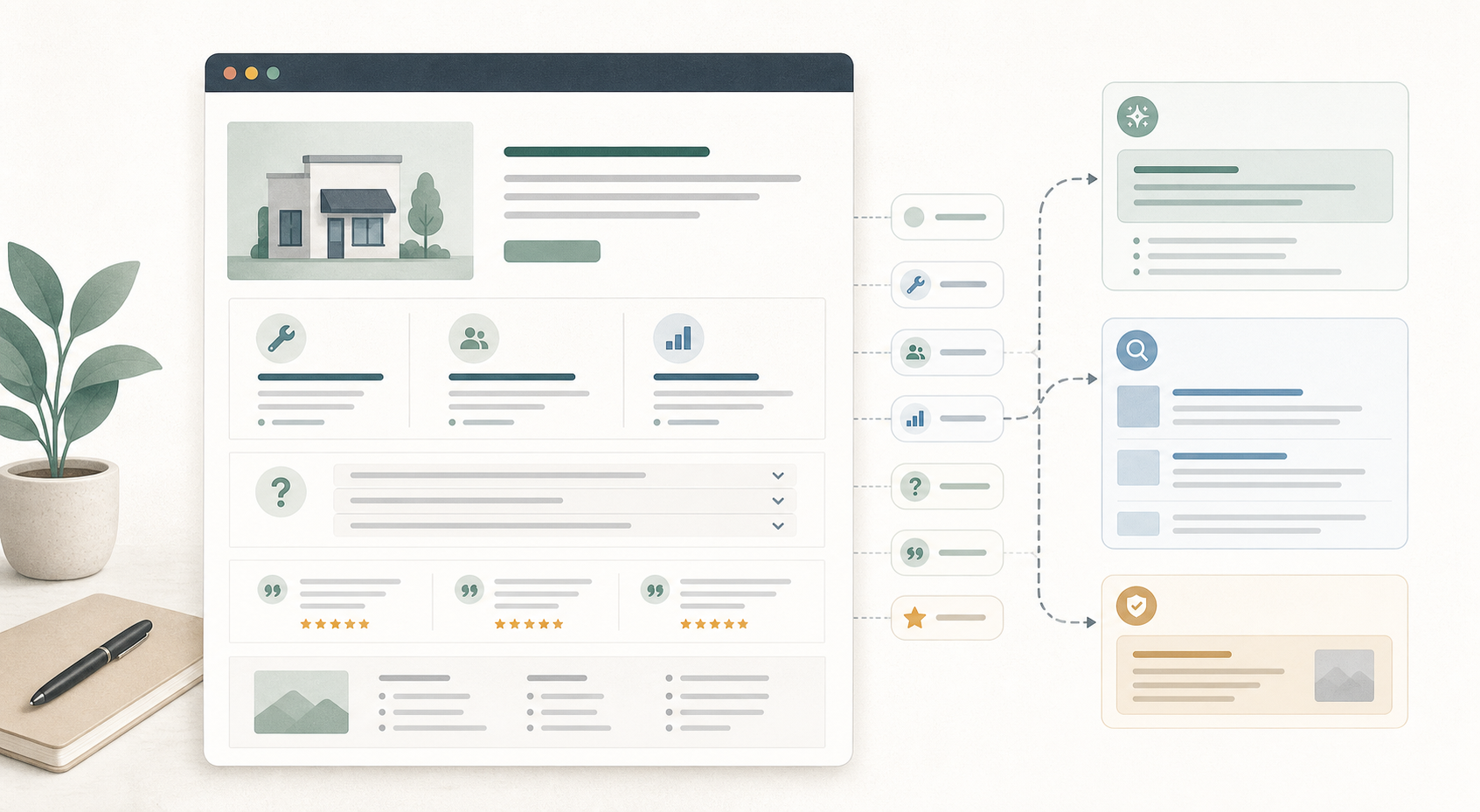
The report is the workbench
The point is not a shiny score. It is knowing what AI understands about your offer today, where the evidence breaks down, and what deserves attention first.
AnswerCue is for products and specialist services that need a clearer way to explain what they do, who they are for, and why a buyer should choose them.
Better evidence improves eligibility and accuracy. It never guarantees placement.
Private beta
Join the waitlist for early access to a focused read of how AI understands your offer, which evidence is missing, and what deserves attention first.
Invites will go out in small batches.
Join the waitlistNo payment details. One useful launch email, then access updates.Good questions
No. Strong technical SEO is the foundation, but AI visibility also depends on whether a model can identify your offer, connect it to a specific need, verify your claims, and explain why it belongs in a recommendation.
No credible provider can guarantee inclusion. Answers vary by model, prompt, location, available sources, and time. The goal is to make your offer easier to retrieve, understand, verify, and recommend when it is genuinely relevant.
The scan is designed around how tools such as ChatGPT, Claude, Gemini, and Google AI search features may understand and recommend product and service websites. The exact mix of tests evolves as those products change.
No. It can be a useful orientation file, but it is not a shortcut to ranking or citation. Clear indexable pages, accurate information, crawl access, helpful answers, and credible proof matter far more.
It is for software products, developer tools, productized services, consultants, agencies, and specialist providers that want their offer to be easier for AI to explain and recommend.
You will receive a confirmation email. We are inviting products and services in small batches so we can learn from each early diagnostic before opening self-serve access.
The beta scanner automates the crawl, probes, and report. The output remains a diagnostic snapshot, so important recommendations should still be reviewed by someone who understands the product and its customers.